
What Should You Look for in the Best Pest Control in India?
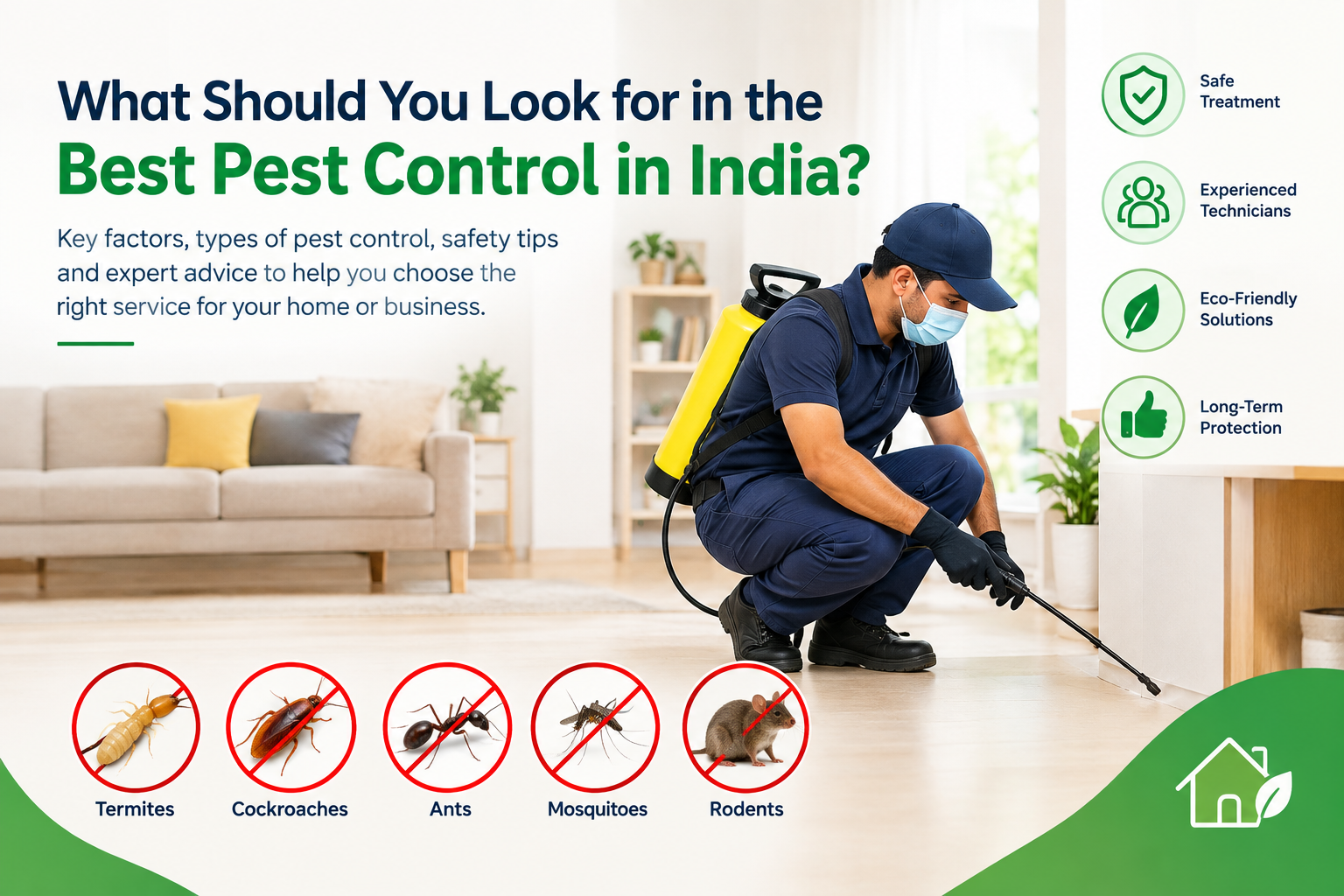
Finding the right pest control service can be challenging when homeowners and businesses have multiple options available. Different properties can experience different pest problems, from termites and cockroaches to ants, mosquitoes, rodents, and other unwanted insects or pests. The right approach depends on the type of pest, the level of activity, the property structure, and the treatment required.
So, what should you look for in the best pest control in India?
A suitable pest control service should provide a clear understanding of the pest problem, explain the proposed treatment, follow appropriate product-label and safety instructions, and communicate what property owners should do before and after treatment. Service quality is not determined by a single factor such as price. Inspection, treatment planning, safety practices, communication, and follow-up can all be important considerations.
For people searching online for the best pest control in India, this guide explains the key factors to consider before selecting a professional pest control service.
What Does “Best Pest Control” Actually Mean?
The phrase “best pest control in India” can mean different things to different people.
For one homeowner, the priority may be termite prevention. Another person may need cockroach control for a kitchen, while a business may require a broader pest management plan.
Instead of choosing a service based only on a marketing claim, consider whether the provider can address your specific pest problem appropriately.
Important factors can include:
- Proper understanding of the pest problem
- Suitable treatment options
- Clear service information
- Appropriate safety precautions
- Experienced technicians
- Transparent communication
- Reasonable service expectations
- Follow-up recommendations
- Preventive advice
The right pest control service should be selected according to the property’s actual needs rather than a generic claim.
How Do You Choose the Best Pest Control in India?
When comparing pest control services, start by identifying what you actually need.
Ask yourself:
- Which pest is causing the problem?
- Where is the activity occurring?
- How long has the problem been present?
- Is the property residential or commercial?
- Are children, pets, or sensitive occupants present?
- Is the problem recurring?
- Is preventive treatment required?
Once you understand the problem, you can compare providers based on their service scope and treatment approach.
A professional provider should be able to explain what they recommend and why that approach may be suitable for your property.
What Types of Pest Control Services Are Available?
Pest control services can cover a variety of common household and commercial pest problems.
Termite Control
Termites can remain hidden inside soil, walls, wooden structures, and other concealed areas. They may damage wooden components and cellulose-based materials over time.
Termite management can include inspection, preventive treatment, soil treatment, wood treatment, or other approaches depending on the property and infestation.
Cockroach Control
Cockroaches commonly appear in kitchens, bathrooms, storage areas, restaurants, offices, and other places where food, moisture, or suitable hiding areas are available.
Professional cockroach control may involve identifying harbourage areas and applying appropriate treatment methods.
Mosquito Control
Mosquito management can involve reducing breeding conditions and treating relevant areas where appropriate. Removing standing water and improving environmental conditions are also important parts of mosquito prevention.
Ant Control
Ants may enter buildings in search of food, moisture, or shelter. Finding potential entry points and food sources can be an important part of managing recurring ant activity.
Rodent Control
Rodents can create hygiene and property-maintenance concerns. Professional rodent management may involve identifying entry points, food sources, harbourage areas, and other contributing conditions.
General Pest Management
Some properties experience more than one pest problem. In these cases, a broader pest management approach may be considered based on the property’s requirements.
Why Is Pest Inspection Important?
An inspection can help identify where pest activity is occurring and what factors may be contributing to the problem.
For example, visible cockroaches in a kitchen may indicate activity in hidden areas. Similarly, seeing termites around one wooden component does not necessarily mean that the activity is limited to that location.
During an assessment, relevant areas may include:
- Kitchens
- Bathrooms
- Storage areas
- Wooden structures
- Entry points
- Cracks and gaps
- Drainage areas
- Moisture-prone locations
- Outdoor areas
- Food-storage areas
The exact inspection process depends on the pest and property.
What Should You Ask a Pest Control Company Before Booking?
Before choosing a pest control service, asking a few practical questions can help you understand what you are paying for.
1. Which pest does the treatment target?
Make sure the service is designed for the pest affecting your property.
2. What treatment method will be used?
Ask for a general explanation of the treatment method and where it will be applied.
3. What preparation is required?
Some treatments may require preparation such as covering food, clearing access to treatment areas, or temporarily leaving treated spaces.
4. Are there safety precautions?
Ask about precautions for occupants, children, pets, food, and treated areas. Follow the provider’s instructions and the relevant product-label directions.
5. Is follow-up treatment required?
Certain pest problems may require monitoring or additional treatment depending on the infestation and treatment method.
6. What does the service include?
Understand whether inspection, treatment, follow-up visits, or preventive recommendations are included.
7. What should I do after treatment?
A professional provider should explain relevant post-treatment instructions.
Is Professional Pest Control Better Than DIY Treatment?
DIY pest control products can be useful for limited situations, but they may not always address the underlying source of a recurring infestation.
For example, spraying a visible cockroach may remove that particular insect without addressing hidden harbourage areas or entry points.
Similarly, treating one visible area for termites may not address activity elsewhere.
Professional pest control can provide a more structured process that may include:
- Identifying the pest
- Assessing the affected area
- Finding potential sources or entry points
- Selecting an appropriate treatment
- Applying treatment according to instructions
- Providing prevention or follow-up recommendations
Whether professional treatment is necessary depends on the severity and type of pest problem.
How Important Is Safety in Pest Control?
Safety should always be considered when pest control products are used.
A responsible pest control service should communicate relevant precautions before treatment. Property owners should also follow all preparation and re-entry instructions provided by the service.
Important considerations may include:
- Keeping food covered or stored appropriately
- Removing or protecting items as instructed
- Keeping children away from treatment areas
- Following pet-related precautions
- Observing recommended re-entry times
- Avoiding contact with treated surfaces when instructed
- Following product-specific directions
The exact precautions depend on the treatment method and product used.
How Much Does Pest Control Cost in India?
There is no single price for pest control throughout India.
The cost can vary depending on:
- Type of pest
- Property size
- Location
- Treatment method
- Level of infestation
- Number of visits
- Type of property
- Preventive or corrective treatment
- Areas requiring treatment
For this reason, property owners should compare services based on what is included rather than choosing solely according to the lowest quoted price.
A clear quotation should explain the basic service scope and any relevant follow-up requirements.
How Often Should Pest Control Be Done?
There is no universal schedule that applies to every property.
The appropriate frequency can depend on the pest, property conditions, previous infestation history, environmental factors, and treatment approach.
Some properties may require treatment only when a problem occurs, while others may benefit from periodic monitoring or preventive pest management.
A professional assessment can help determine an appropriate approach for the specific property.
What Makes a Pest Control Service Reliable?
Reliability is not simply about completing a treatment quickly. It can involve several aspects of the customer experience and service process.
Clear Communication
Customers should understand what treatment is being recommended and what they need to do before and after the service.
Suitable Treatment
The treatment should be appropriate for the pest problem and the property’s circumstances.
Responsible Application
Products should be applied according to their label directions and applicable requirements.
Professional Assessment
The provider should consider the location and nature of the pest activity rather than relying on a one-size-fits-all approach.
Practical Prevention Advice
Reducing conditions that support pest activity can help manage recurring problems.
How Can You Prevent Common Pest Problems?
Professional treatment is only one part of pest management. Property maintenance can also make a difference.
Keep Food Stored Properly
Store food in suitable closed containers and clean food spills promptly.
Maintain Clean Areas
Regular cleaning can reduce food sources and hiding places for many common pests.
Fix Moisture Problems
Repair leaks and address areas where water regularly accumulates.
Seal Cracks and Gaps
Where practical, seal gaps around windows, doors, pipes, and other potential entry points.
Manage Waste Properly
Keep waste containers closed and dispose of rubbish regularly.
Reduce Clutter
Excess cardboard, paper, unused materials, and clutter can provide potential hiding areas for certain pests.
Remove Standing Water
Standing water can contribute to mosquito breeding. Check containers, drains, outdoor areas, and other locations where water may collect.
What Should Homeowners Consider Before Termite Treatment?
Termite problems deserve particular attention because termite activity can remain hidden.
Homeowners should look for signs such as:
- Mud tubes
- Damaged wood
- Hollow-sounding wood
- Discarded wings
- Visible termites
- Changes in wooden doors or frames
- Damage around wooden structures
If these signs are present, arranging an inspection can help determine whether professional termite management is appropriate.
What Should Businesses Consider When Choosing Pest Control?
Commercial properties may require pest management that takes business operations into account.
Restaurants, offices, warehouses, retail stores, schools, and other commercial buildings can have different pest-control requirements.
A commercial pest management plan may consider:
- Business operating hours
- Food-handling areas
- Storage spaces
- Customer areas
- Employee areas
- Waste-management areas
- Building entry points
- Recurring pest activity
Businesses should discuss their operating requirements with the pest control provider before treatment.
What Are the Benefits of Choosing a Local Pest Control Service?
Local knowledge can be useful when dealing with pest problems because environmental conditions, property types, and common pest concerns can vary between locations.
For customers in Ahmedabad, choosing a provider that serves the area can make communication, inspection, and service coordination more convenient.
However, location alone should not be the only selection factor. Customers should also consider treatment methods, service scope, communication, and safety practices.
Why Choose Urban Junggle for Pest Control Services?
Urban Junggle offers pest control services for residential and commercial property owners dealing with common pest-related concerns.
When selecting a pest control provider, it is important to understand the specific problem before choosing a treatment. Urban Junggle can be considered by customers looking for professional pest control services and guidance based on their property’s requirements.
The focus should be on identifying the pest issue, understanding the available treatment approach, following appropriate safety instructions, and taking preventive steps where necessary.
To learn more about Urban Junggle and its pest control services, visit:
Property owners can explore the available services and contact Urban Junggle to discuss their pest control requirements.
Frequently Asked Questions About the Best Pest Control in India
What is the best pest control in India?
There is no single pest control service that is universally the best for every property. The appropriate choice depends on the pest, property type, infestation level, treatment requirements, service area, and safety considerations.
How do I choose a good pest control company?
Compare the company’s service scope, treatment approach, communication, safety instructions, experience, follow-up process, and pricing. Make sure the service addresses your specific pest problem.
Which pest control is best for termites?
Termite treatment depends on the type of termite activity and property construction. Professional inspection can help determine whether soil treatment, wood treatment, preventive treatment, or another approach is appropriate.
Is professional pest control safe?
Pest control can be performed with safety precautions when products are used according to their label directions and applicable requirements. Customers should follow all preparation, application, and re-entry instructions provided by the service provider.
How long does pest control treatment take?
Treatment time varies depending on the pest, property size, treatment method, and areas requiring attention. The provider can give a more accurate estimate after understanding the property and pest problem.
Can pest control completely prevent pests?
No treatment can guarantee that pests will never return under every circumstance. Pest management is generally more effective when professional treatment is combined with proper hygiene, moisture control, waste management, and building maintenance.
Should I leave my home during pest control?
Whether occupants need to leave depends on the treatment method and product being used. Follow the specific instructions provided by the pest control professional.
How can I prevent pests from returning?
Keep food stored properly, maintain cleanliness, control moisture, remove standing water, seal potential entry points, manage waste, reduce clutter, and address pest activity promptly.
Is pest control necessary for businesses?
Businesses may benefit from professional pest management depending on their property type, operations, pest risks, and regulatory or hygiene requirements. Food-related businesses may have particularly important pest-management considerations.
Final Thoughts
Choosing the best pest control in India should be based on the actual needs of your property rather than a simple marketing claim. Different pests require different approaches, and the right treatment can depend on factors such as infestation level, property construction, environmental conditions, and the areas affected.
Before booking a service, ask questions about inspection, treatment methods, safety precautions, service coverage, pricing, and follow-up requirements. Maintaining cleanliness, controlling moisture, managing waste, sealing entry points, and monitoring vulnerable areas can also support long-term pest management.
For homeowners and businesses looking for professional pest control services, Urban Junggle provides a range of pest management solutions. Visit https://urbanjunggle.com/ to learn more about the services and discuss your property’s requirements.
By combining informed service selection with regular property maintenance and appropriate professional treatment, property owners can take practical steps toward managing common pest concerns.
